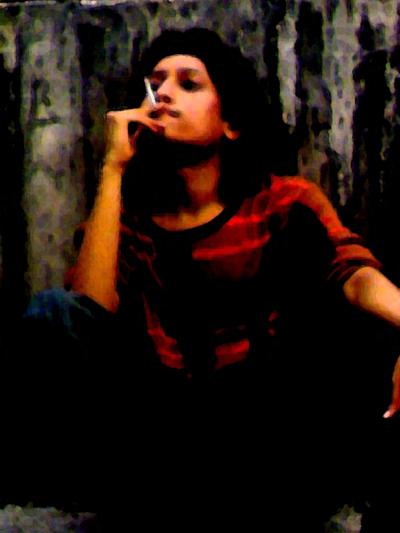
"I bet that old man has a million dollars stashed in one of those steel lockers down at the Trailways Bus Station. I see him down there all the time," said a young teenage boy to his friend. "I bet he wears the key to the locker around his neck. I saw him pull out a purple bag several times when he was sitting on top of the heater vent down by the Florida Theater." "If he has a million dollars why would he be living on the street?" his friend asked. "He's crazy and he's all messed up in the head.
Tuesday, January 6, 2009
Key to Life
"I bet that old man has a million dollars stashed in one of those steel lockers down at the Trailways Bus Station. I see him down there all the time," said a young teenage boy to his friend. "I bet he wears the key to the locker around his neck. I saw him pull out a purple bag several times when he was sitting on top of the heater vent down by the Florida Theater." "If he has a million dollars why would he be living on the street?" his friend asked. "He's crazy and he's all messed up in the head.
Labels: life style, Power of your actions, the way
Posted by Munnag Kumar Anne at 3:57 AM 66 comments
Tuesday, December 9, 2008
12-photographs-that-changed-the-world
Any picture can speak 1,000 words, but only a select few say something poignant enough to galvanize an entire society. The following photographs screamed so loudly that the entire world stopped to take notice.
1. The Photograph That Raised the Photojournalistic Stakes:
"Omaha Beach, Normandy, France"
Robert Capa, 1944
"If your pictures aren’t good enough," war photographer Robert Capa used to say, "you aren’t close enough." Words to die by, yes, but the man knew of what he spoke. After all, his most memorable shots were taken on the morning of D-Day, June 6, 1944, when he landed alongside the first waves of infantry at Omaha Beach.
Caught under heavy fire, Capa dove for what little cover he could find, then shot all the film in his camera, and got out - just barely. He escaped with his life, but not much else. Of the four rolls of film Capa took of the horrific D-Day battle, all but 11 exposures were ruined by an overeager lab assistant, who melted the film in his rush to develop it. (He was trying to meet the deadline for the next issue of Life magazine.)
In an ironic twist, however, that same mistake gave the few surviving exposures their famously surreal look ("slightly out of focus," Life incorrectly explained upon printing them). More than 50 years later, director Steven Spielberg would go to great lengths to reproduce the look of that "error" for his harrowing D-Day landing sequence in "Saving Private Ryan," even stripping the coating from his camera lenses to echo Capa’s notorious shots.
2. The Photograph That Gave a Face to the Great Depression
"Migrant Mother"
Dorothea Lange, 1936
As era-defining photographs go, "Migrant Mother" pretty much takes the cake. For many, Florence Owens Thompson is the face of the Great Depression, thanks to legendary shutterbug Dorothea Lange. Lange captured the image while visiting a dusty California pea-pickers’ camp in February 1936, and in doing so, captured the resilience of a proud nation facing desperate times.
Unbelievably, Thompson’s story is as compelling as her portrait. Just 32 years old when Lange approached her ("as if drawn by a magnet," Lange said). Thompson was a mother of seven who’d lost her husband to tuberculosis. Stranded at a migratory labor farm in Nipomo, Calif. her family sustained themselves on birds killed by her kids and vegetables taken from a nearby field - as meager a living as any earned by the other 2,500 workers there. The photo’s impact was staggering. Reproduced in newspapers everywhere, Thompson’s haunted face triggered an immediate public outcry, quickly prompting politicos from the federal Resettlement Administration to send food and supplies. Sadly, however, Thompson and her family had already moved on, receiving nary a wedge of government cheese for their high-profile misery. In fact, no one knew the identity of the photographed woman until Thompson revealed herself years later in a 1976 newspaper article.
3. The Photograph That Brought the Battlefield Home
"Federal Dead on the Field of Battle of First Day, Gettysburg, Pennsylvania"
Mathew Brady, 1863
As one of the world’s first war photographers, Mathew Brady didn’t start
out having as action-packed a career as you might think. A successful daguerreotypist and a distinguished gentleman, Brady was known for his portraits of notable people such as Abraham Lincoln and Robert E. Lee. In other words, he was hardly a photojournalist in the trenches.
In fact, Brady had everything to lose by making a career move - his money, his business, and quite possibly his life. Nevertheless, he decided to risk it all and follow the Union Army into battle with his camera, saying, "A spirit in my feet said, ‘Go!’" And go he did - at least until he got a good look at the pointy end of a Confederate bayonet.
After narrowly escaping capture at the first Battle of Bull Run, Brady’s chatty feet quieted down a bit, and he began sending assistants in his place. In the span of only a few years, Brady and his team shot more than 7,000 photographs - an astounding number when you consider that developing a single plate required a horse-drawn-wagon-full of cumbersome equipment and noxious chemicals. Not exactly what you’d call "point-and-shoot."
Tethered as he was to his equine-powered darkroom and with film speeds being much slower then, Brady produced war photos that are understandably light on the action and heavy on the aftermath. Still, they mark the first time Americans were so immediately confronted with the grim realities of the battlefield.
4. The Photograph That Ended a War But Ruined a Life
"Murder of a Vietcong by Saigon Police Chief"
Eddie Adams, 1968
"Still photographs are the most powerful weapon in the world," AP photojournalist Eddie Adams once wrote. A fitting quote for Adams, because his 1968 photograph of an officer shooting a handcuffed prisoner in the head at point-blank range not only earned him a Pulitzer Prize in 1969, but also went a long way toward souring Americans’ attitudes about the Vietnam War.
For all the image’s political impact, though, the situation wasn’t as black-and-white as it’s rendered. What Adams’ photograph doesn’t reveal is that the man being shot was the captain of a Vietcong "revenge squad" that had executed dozens of unarmed civilians earlier the same day. Regardless, it instantly became an icon of the war’s savagery and made the official pulling the trigger - General Nguyen Ngoc Loan - its iconic villain.
Sadly, the photograph’s legacy would haunt Loan for the rest of his life. Following the war, he was reviled where ever he went. After an Australian VA hospital refused to treat him, he was transferred to the United States, where he was met with a massive (though unsuccessful) campaign to deport him. He eventually settled in Virginia and opened a restaurant but was forced to close it down as soon as his past caught up with him. Vandals scrawled "we know who you are" on his walls, and business dried up.
Adams felt so bad for Loan that he apologized for having taken the photo at all, admitting, "The general killed the Vietcong; I killed the general with my camera."
5. The Photograph That Isn’t as Romantic as You Might Think
"V-J Day, Times Square, 1945", a.k.a. "The Kiss"
Alfred Eisenstaedt, 1945
On August 14, 1945, the news of Japan’s surrender was announced in the United States, signaling the end of World War II. Riotous celebrations erupted in the streets, but perhaps none were more relieved than those in uniform. Although many of them had recently returned from victory in
Europe, they faced the prospect of having to ship out yet again, this time to the bloody Pacific.
Among the overjoyed masses gathered in Times Square that day was one of the most talented photojournalists of the 20th century, a German immigrant named Alfred Eisenstaedt. While snapping pictures of the celebration, he spotted a sailor "running along the street grabbing any and every girl in sight." He later explained that, "whether she was a grandmother, stout, thin, old, didn’t make any difference."
Of course, a photo of the sailor planting a wet one on a senior citizen wouldn’t have made the cover of Life, but when he locked lips with an attractive nurse, the image was circulated in newspapers across the country. Needless to say, "V-J Day" didn’t capture a highly anticipated embrace by long-lost lovers, but it also wasn’t staged, as many critics have claimed. In any case, the image remains an enduring symbol of America’s exuberance at the end of a long struggle.
6. The Photograph That Destroyed an Industry
"Hindenburg"
Murray Becker, 1937
Forget the Titanic, the Lusitania, and the comparatively unphotogenic accident at Chernobyl. Thanks to the power of images, the explosion of the Hindenburg on May 6, 1937, claims the dubious honor of being the quintessential disaster of the 20th century.
In the grand scheme of things, however, the Hindenburg wasn’t all that disastrous. Of the 97 people aboard, a surprising 62 survived. (in fact, it wasn’t even the worst Zeppelin crash of the 20th century. Just four years earlier, the U.S.S. Akron had crashed into the Atlantic killing more than twice as many people.) But when calculating the epic status of a catastrophe, terrifying photographs and quotable quotes ("Oh, the humanity!") far outweigh body counts.
Assembled as part of a massive PR campaign by the Hindenburg’s parent company in Germany, no fewer than 22 photographers, reporters, and newsreel cameramen were on the scene in Lakehurst, N.J. when the airship went down. Worldwide publicity of the well-documented disaster shattered the public’s faith in Zeppelins, which were, at the time, considered the safest mode of air travel available.
During the 1920s and 1930s, Zeppelins had operated regular flights, totting civilians back and forth between Germany and the Americas. But all of that stopped in 1937. The incident effectively killed the use of dirigibles as a commercially viable mode of passenger transport, ending the golden age of the airship not with a whimper, but with a horrific bang that was photographed and then syndicated around the globe.
7. The Photograph That Saved the Planet
"The Tetons - Snake River"
Ansel Adams, 1942
Some claim photography can be divided into two eras: Before Adams and After Adams. In Times B.A., for instance, photography wasn’t widely considered an art form. Rather, photographers attempted to make their pictures more "artistic" (i.e., more like paintings) by subjecting their exposures to all sorts of extreme manipulations, from coating their lenses with petroleum jelly to scratching the surfaces of their negatives with needles. Then came Ansel Adams, helping shutterbugs everywhere get over their collective inferiority complex.
Brashly declaring photography to be "a blazing poetry of the real," Adams eschewed manipulations, claiming they were simply derivative of other art forms. Instead, he preached the value of "pure photography." In an era when handheld point-and-shoot cameras were quickly becoming the norm, Adams and other landscape photographers clung to their bulky, old-fashioned large-format cameras. Ultimately, Adams’ pictures turned photography into fine art. What’s more, they shaped the way Americans thought of their nation’s wilderness and, with that, how to preserve it.
Adams’ passion for the land wasn’t limited to vistas he framed through the lens. In 1936, he accompanied his photos to Washington to lobby for the preservation of the Kings Canyon area in California. Sure enough, he was successful, and it was declared a national park.
8. The Photograph That Kept Che Alive
"The Corpse of Che Guevara"
Freddy Alborta, 1967
Sociopathic thug? Socialist luminary? Or as existentialist Jean-Paul Sartre called him, "the most complete human being of our age"? Whatever you believe, there’s no denying that Ernesto "Che" Guevara has become the patron saint of revolutionaries. Undeniably, he is a man of mythical status - a reputation that persists less because of how he lived than because of how he died.
Unenthused by his efforts to incite revolution among the poor and oppressed in Bolivia, the nation’s army (trained and equipped by the U.S. military and the CIA) captured and executed Guevara in 1967. But before dumping his body in a secret grave, they gathered around for a strategic photo op. They wanted to prove to the world that Che was dead, in hopes that his political movement would die with him. in fact, anticipating charges that the photo had been faked, Che’s thoughtful captors amputated his hands and preserved them in formaldehyde.
But by killing the man, Bolivian officials unwittingly birthed his legend. The photo, which circulated around the world, bore a striking resemblance to Renaissance paintings of Christ taken down from the cross. Even as Che’s killers preened and gloated above him (the officer on the right seems to be inadvertently pointing to a wound on Guevara’s body near where Christ’s final wound was inflicted), Che’s eerily peaceful face was described as showing forgiveness. The photo’s allegorical significance certainly wasn’t lost on the revolutionary protesters of the era. They quickly adopted "Che lives!" as a slogan and rallying cry. Thanks to this photograph, "the passion of the Che" ensured that he would live on forever as a martyr for the socialist cause.
9. The Photograph that Allowed Geniuses to Have a Sense of Humor
"Einstein with his Tongue Out"
Arthur Sasse, 1951
Arthur Sasse/AFP-Getty Images
You may appreciate this memorable portrait as much as the next fellow, but it’s still fair to wonder: "Did it really change history?" Rest assured, we think it did. While Einstein certainly changed history with his contributions to nuclear physics and quantum mechanics, this photo changed the way history looked at Einstein. By humanizing a man known chiefly for his brilliance, this image is the reason Einstein’s name has become synonymous not only with "genius," but also with "wacky genius."
So why the history-making tongue? It seems Professor Einstein, hoping to enjoy his 72nd birthday in peace, was stuck on the Princeton campus enduring incessant hounding by the press. Upon being prodded to smile for the camera for what seemed like the millionth time, he gave photographer Arthur Sasse a good look at his uvula instead. This being no ordinary tongue, the resulting photo became an instant classic, thus ensuring that the distinguished Novel Prize-winner would be remembered as much for his personality as for his brain.
10. The Photograph That Made the Surreal Real
"Dalí Atomicus"
Philippe Halsman, 1948
Philippe Halsman / Estate of Philippe Halsman
Philippe Halsman is quite possibly the only photographer to have made a career out of taking portraits of people jumping. But he claimed the act of leaping revealed his subjects’ true selves, and looking at his most famous jump, "Dalí Atomicus," it’s pretty hard to disagree.
The photograph is Halsman’s homage both to the new atomic age (prompted by physicist’ then-recent announcement that all matter hangs in a constant state of suspension) and to Dalí’s surrealist masterpiece "Leda Atomica" (seen on the right, behind the cats, and unfinished at the time). It took six hours, 28 jumps, and a roomful of assistants throwing angry cats and buckets of water into the air to get the perfect exposure.
But before settling on the "Atomicus" we know today, Halsman rejected a number of other concepts for the shot. One was the idea of throwing milk instead of water, but that was abandoned for fear that viewers, fresh from the privations of World War II, would condemn it as a waste of milk. Another involved exploding a cat in order to capture it "in suspension," though that arguably would have been a waste of cats.
Halsman’s methods were as unique as they were effective. His celebrity "jump" portraits appeared on at least seven Life magazine covers and helped usher in a new - and radically more adventurous - era of portrait photography.
11. The Photograph That Lied
"Loch Ness Monster" a.k.a. "The Surgeon’s Photo"
Ian Wetherell, 1934
While strange sightings around Scotland’s murky Loch Ness date back to 565 C.E., it wasn’t until photography reached the Loch that Nessie Fever really took off. The now-legendary (and legendarily blurry) "surgeon’s photo," reportedly taken in April of 1934, fueled decades of frenzied speculation, several costly underwater searches, and a local tourism industry that rakes in several million dollars each year.
But the party almost ended in 1994, when a report was published saying that model-maker Christian Spurling admitted to faking the photo. According to Spurling’s statement, his stepfather, Marmaduke Wetherell, worked as a big game hunter and had been hired by London’s Daily Mail to find the beast. But rather than smoke out the creature, he decided to fake it. Wetherell, joined by Spurling and his son, Ian, built their own monster to float on the lake’s surface using a toy submarine and some wood putty. Ian actually took the photo, but to lend more credibility to the story, they convinced an upstanding pillar of the community - surgeon Robert Kenneth Wilson - to claim it as his own. Just goes to prove the old adage, "The camera never lies." People, on the other hand, do.
12. The Photograph That Almost Wasn’t
"Gandhi at his Spinning Wheel"
Margaret Bourke-White, 1946
"Gandhi at his Spinning Wheel," the defining portrait of one of the 20th century’s most influential figures, almost didn’t happen, thanks to the Mahatma’s strict demands. Granted a rare opportunity to photograph India’s leader; Life staffer Margaret Bourke-White was all set to shoot when Gandhi’s secretaries stopped her cold: If she was going to photograph Gandhi at the spinning wheel (a symbol for India’s struggle for independence), she first had to learn to use one herself.
But that wasn’t all. The ascetic Mahatma wasn’t to be spoken to (it being his day of silence.) And because he detested bright light, Bourke-White was only allowed to use three flashbulbs. Having cleared all these hurdles, however, there was still one more - the humid Indian weather, which wreaked havoc on her camera equipment. When time finally came to shoot, Bourke-White’s first flashbulb failed. And while the second one worked, she forgot to pull the slide, rendering it blank.
She thought it was all over, but luckily, the third attempt was successful. In the end, she came away with an image that became Gandhi’s most enduring representation. it was also among the last portraits of his life; he was assassinated less than two years later.
Labels: life style, Photographs, Power of your actions, the way
Posted by Munnag Kumar Anne at 7:03 PM 1 comments
Thursday, December 4, 2008
Enjoying coffee of life, not the cup of money
Enjoy the coffee....
A group of alumni, highly established in their careers, got together to visit their old university lecturer. Conversation soon turned into complaints about stress in work and life. Offering his guests coffee, the lecturer went to the Kitchen and returned with a large pot of coffee and an assortment of cups: porcelain, plastic, glass, some plain-looking and some expensive and exquisite, telling them to help themselves to hot coffee. When all the students had a cup of coffee in hand, the lecturer said: "If you noticed, all the nice-looking, expensive cups were taken up, leaving behind the plain and cheap ones. While it is but normal for you to want only the best for yourselves, that is the source of your problems and stress. What all of you really wanted was coffee, not the cup, but you consciously went for the better cups and are eying each other's cups." "Now, if Life is coffee, then the jobs, money and position in society are the cups. They are just tools to hold and contain Life, but the quality of Life doesn't change." "Sometimes, by concentrating only on the cup, we fail to enjoy the coffee in it."
So don't let the cups drive you....... enjoy the Coffee instead
Labels: Happy, life style, Power of your actions, the way, Tips
Posted by Munnag Kumar Anne at 6:44 AM 0 comments
Monday, November 24, 2008
COUNT YOUR BLESSINGS
Labels: Cute, Great Articles, Inspriation, life style, Power of your actions, the way
Posted by Munnag Kumar Anne at 3:15 AM 0 comments
Thursday, November 20, 2008
Mind Power- Inner Psychology to Success
The term mind power and the subconscious mind power are described in many different ways. In the psychosomatic sense mind power is labeled as ability to have emotions, imagination, memory, and will; and subconscious mind power is labeled as part of the normal individual’s personality in which mental processes function without consciousness under normal waking conditions.
Contents
1. How Mind Power and Subconscious Mind Power work
2. How to use Subconscious Mind for success
Mind power is our conscious mind, the way we think. The mind is similar to a constantly flowing spring however a natural spring cannot send forth fresh water and bitter from the same opening, nor yield both salt water and fresh. So it is with the mind and its thoughts; it cannot equally think negative and positive thoughts at the same time. One will rule the other.
Since the mind reflects habitual thoughts, it is therefore our responsibility to influence our mind and brain with positive emotions, thoughts and energy as the dominating factors in our mind. Mind power is beyond positive thinking or brain power, it is thinking than believing what you think that will manifest your reality. Since this mind power is power of thought and beliefs, and these thoughts and beliefs will create the outcome of your now, you will want to stay aware to the reflections you are thinking.
Now mind power is a dual system that includes your power of thought(brain) and your subconscious mind. We all have subconscious mind power; it can be as small as smiling at your boss in the hopes of improving the odds of acquiring a raise.
It can be the way you unconsciously handle a situation whether appropriately or not. Power of the subconscious mind comes from the thoughts and beliefs of your the power of the your mind. However you think and believe is what your subconscious mind power will produce. This is done continuously, one minute at a time. Every thought nourished regularly by your mind power will activate your subconscious mind to generate those thoughts and energy whether good or bad into your life. This is how you’re present and future is created.
Your mind power and your subconscious mind work together and they fashion your reality. Let’s use a parallel to help you visualize how this works. Your subconscious mind power is similar to fertile soil that consents to any seed planted inside it. Your habitual thoughts and beliefs are the seeds which are being continually sown and they will eventually produce a crop. So if you plant weeds you will get weeds, if you plant fruit, you will get fruit. In other words, you reap what you sow. Now the conscious mind is the gardener, and it is the mind power to choose what reaches our inner garden- the subconscious.
Unfortunately, most of us do not have green thumbs because of lack of knowledge of this law, the psychology behind this success and because of this ignorance we have allowed all kinds of seeds, both good and bad, to enter. So our subconscious mind power will manifest failure, ill health and all kinds of misfortunes just as effortlessly as it will manifest success and abundance. However, it cannot manifest it both at the same time, which is why the need to constantly actuate the positive until the fertile soil of your subconscious mind power reaps only abundance. Success is only a choice away.Labels: Health, Humanity, life style, Power of your actions, the way, Tips
Posted by Munnag Kumar Anne at 6:09 PM 0 comments
Wednesday, November 19, 2008
The Healing Spirit Of Chiron
In mythology, Chiron (ky-ron) was a centaur, half-man and half-horse. He was wounded in the knee by an arrow and sought a cure for the remainder of his life. Due to his immortality he was not released from his wound; yet he became the consummate healer. He passed on his knowledge of the healing arts to others, specifically healing herbs, astrology, ethics, music and archery. Hence, the archetypal meaning of Chiron pertains to "the wounded healer."
Chiron is the eleventh planet of Astrological significance. Currently Chiron is in the sign of Capricorn until March 2005 when it moves into Aquarius. It has a 51 year orbit. Chiron represents the bridge between the animal and the spiritual; and the inner marriage of masculine/feminine. Chiron's location between Saturn and Uranus highlights the connection between the old and the new, the past and the future, the Age of Pisces and the Age of Aquarius.
The opportunities to journey deeply within our selves are inspired by Chiron. As we replay old wounds from the past we can become more attuned to our healing. Symbolically, Chiron is the journey from the wounded one to the teacher and mentor. We have the spiritual power to exercise awareness of our pain, rather than to escape our pain. Therefore, is it not our conscious position to be in the now so that we may heal the past?
Journey through Chiron and Transcend your pain (find Chiron in your natal chart):
- How were you wounded in a past life? Make a list or write a letter.
-
Explain 2 fears you experience in this current life? Note your gut reactions.
-
How can you develop courage to face these fears? Open your heart chakra.
-
With compassion and love, how can you let go of these wounds? Heal thyself.
-
To whom may you teach the lessons you have learned in healing? Mentor.
Exploring Chiron is an enlightening journey towards inner peace. With compassion, acceptance, forgiveness and unconditional love for our selves we are connected to God. Let the healing begin!
Labels: Astrology, Chiron, life style, the way
Posted by Munnag Kumar Anne at 5:42 AM 1 comments
Monday, November 17, 2008
Suicide is wrong... Why ??

It is not wrong to feel depressed, unhappy, out of control, lost, or scared. It is not wrong to feel paralyzed in a bad situation or hopeless about the future. It is not wrong to have fleeting thoughts that things would be so much easier, if only you were not here.
Feeling this way does not make you a person of weak character. Everyone deals with pain differently, and one person may come away with more intense emotions about a situation than another.
The Impact of Suicide
Please take a moment and think about the following before you hurt yourself.
- Suicide is FOREVER. You do not get to wake up. You do not get a second chance. You will not be able to say, "Wait, I want to stay." There is no turning back.
- Think about the situation in grisly fact. Someone will have to find your body, and most likely it will be someone who loves and cares for you. They will bear this in their memory for the rest of their lives.
- If you kill yourself at someone else’s hand, such as laying in front of a car or train or forcing a police officer to kill you, know that these people will bear the brunt of the emotional turmoil and will always wish that it could have been different.
- There may be people standing on the sidelines, knowing that you are in pain and wishing that they could help you. These people will suffer forever in guilt, wondering if there was more they could have done or said to change your mind. They will blame themselves.
- The repercussions go far beyond this. Friends or family members may grow so despondent that they, in turn, take their own lives.
- Most newspapers will not even mention your name after death by suicide.
If You Are Feeling Suicidal
If you are thinking about killing yourself, you must first and foremost tell someone. Tell a trusted friend, teacher, clergyman, parent or counselor. Do not be afraid of getting help. It means that some part of you is reaching out for life. Do not ignore it. Your life depends on it. Call 1-800-SUICIDE in the United States for 24 hour counseling help. There may also be a crisis hotline listed in the front of the phone book. Talk to someone every day, as long as it takes. Some other tips:
- Make a promise to yourself that you will not harm yourself for at least 24 hours. Use distraction – listen to music, take a bath, or force yourself to do something for someone else.
- Try to spend time with people who are not depressed or who are not part of your circumstances.
- Remove any dangerous objects or weapons from your home.
- Avoid alcohol and drugs.
- Try to create a routine to get you through the day.
- Set one goal to give you motivation. It does not have to be something difficult or even important, just a goal to achieve.
- Do at least one thing you enjoy every day. Even if you don’t think you will enjoy it, give it just ten minutes. You may surprise yourself.
- Try to get outside in the fresh air. It may seem cliché, but the outdoors can do wonders.
- Remember that every person has potential for greatness. Some people believe that we are all here on earth for a reason. No matter what you believe, know that you do have talent that should not be wasted.
Feeling depressed and suicidal often feels like being locked in a closet. You are only aware of your own thoughts, feelings and actions. It may be difficult to think about this at the time, but your life is not just this moment. It will move on, and situations can change. One year, five years, or ten years later you may find it hard to believe that you ever felt this way. Although you may feel that no one loves or cares about you now, you never know who will come into your life down the road to fulfill these things for you.
Suicide: An Ethical Debate
Here are some ethical questions regarding the nature of suicide:
- Is it suicide for a parent to sacrifice their life to save their child’s life?
- Is it acceptable to kill yourself if you are terminally ill or in tremendous physical pain that has no promise of ending?
- Is it immoral for a doctor to assist a patient in killing himself?
- What is worth dying for?
- Is suicide ever the right thing to do?
- Many religious observers believe that suicide is fundamentally wrong.
These are all questions that have to be answered personally and individually.
Suicide is not something that should ever be treated lightly. Parents, friends, coworkers and teachers all need to be aware that these feelings are real and should be taken seriously. It is never too late to reach out to someone who is suffering.
Labels: life style, Suicide, the way
Posted by Munnag Kumar Anne at 5:22 AM 0 comments
Tuesday, January 8, 2008
11 Lessons In Life
11 Lessons In Life
1. It hurts to love someone and not be loved in return, But what is more painful is to love someone and never find the courage to let that person know how you feel.
2. A sad thing in life is when you meet someone who means a lot to you, only to find out in the end that it was never meant to be and you just have to let go.
3. The best kind of friend is the kind you can sit on a porch swing with, never say a word, and then walk away feeling like it was the best conversation you've ever had.
4. It's true that we don't know what we've got until we lose it, but it's also true that we don't know what we've been missing until it arrives.
5. It takes only a minute to get a crush on someone, an hour to like someone, and a day to love someone-but it takes a lifetime
to forget someone.
6. Don't go for looks; they can deceive. Don't go for wealth; even that fades away. Go for someone who makes you smile because it takes only a smile to make a dark day seem bright.
7. Dream what you want to dream; go where you want to go; be what you want to be, because you have only one life and one chance to do all the things you want to do.
8. Always put yourself in the other's shoes. If you feel that it hurts you, it probably hurts the person too.
9. A careless word may kindle strife; a cruel word may wreck a life; a timely word may level stress; a loving word may heal and bless.
10. The happiest of people don't necessarily have the best of everything they just make the most of everything that comes along their way.
11. Love begins with a smile, grows with a kiss, ends with a tear. When you were born, you were crying and everyone around you was smiling. Live your life so that when you die, you're the one smiling and everyone around you is crying.
Labels: Famous Article, life style, the way
Posted by Munnag Kumar Anne at 6:16 AM 0 comments
Monday, December 24, 2007
Five simple rules to be happy

God didn't promise days without pain, laughter without sorrow, sun without rain, but He did promise strength for the day, comfort for the tears, and light for the way.
Disappointments are like road humps, they slow you down a bit but you enjoy the smooth road afterwards. Don't stay on the humps too long. Move on!
When you feel down because you didn't get what you want, just sit tight and be happy, because God is thinking of something better to give you.
When something happens to you, good or bad, consider what it means. There's a purpose to life's events, to teach you how to laugh more or not to cry too hard.
You can't make someone love you, all you can do is be someone who can be loved, the rest is up to the person to realize your worth.
The measure of love is when you love without measure. In life there are very rare chances that you'll meet the person you love and loves you in return. So once you have it don't ever let go, the chance might never come your way again.
It's better to lose your pride to the one you love, than to lose the one you love because of pride.
We spend too much time looking for the right person to love or finding fault with those we already love, when instead we should be perfecting the love we give.
When you truly care for someone, you don't look for faults, you don't look for answers, you don't look for mistakes. Instead, you fight the mistakes, you accept the faults, and you overlook the excuses.
Never abandon an old friend. You will never find one who can take his place. Friendship is like wine, it gets better as it grows older.
Remember the five simple rules to be happy:
1. Free your heart from hatred.
2. Free your mind from worries.
3. Live simply
4. Give more.
5. Expect less.
No one can go back and make a brand new start. Anyone can start from now and make a brand new ending
Labels: Happy, Health, Humanity, life style, the way
Posted by Munnag Kumar Anne at 6:21 PM 0 comments
Sunday, December 9, 2007
" I am studying to teach my daughter "

A Young Widow's determination to take charge through education.
The story of Radha could very well be like so many young girls living in the villages of India. Radha lives in Pipla village in Rajasthan and attended school till class two after which she dropped out because of an age old and utterly biased question: "What is the use for a girl to study?" According to custom she was also married off early and soon gave birth to a child.
It was then that fate took a nasty turn - her husband passed away. With just the rent from a small shop as the only means of livelihood, Radha realized the difference that education could make in her life. However unlike others, Radha believed in herself and soon joined the literacy classes in her neighborhood. Every afternoon, with out fail she attends the classes held by the Zila Saksharta Samiti in the local school. Radha is a good student and studies long hours to make up for all the time that she has lost. She says with determination " I want to be educated so that i can teach my daughter to read and write."
In India the literacy levels for women are quite abysmal. To take this percentage up UNICEF has launched and innovative programme in the states of Jharkhand, Chhattisgarh, Madhya Pradesh and Rajasthan. The programme in partnership with the National Cadet Corps, National Literacy Mission and the Zila Saksharta Samiti ensures that young people are given an opportunity to get an education. What is novel about these classes is that they also provide information on nutrition, health and impart training on rangoli designs and making paper bags.
With the continued support of generous donors like you and help of the local agencies, UNICEF is hopeful of the project being replicated across the country. Perhaps then the with of many such Radhas will come true. So Please donate as much as you can never mind if you donate at least 100 bucks through online.
Here you go with donation website http://www.unicef.org/india/support.html
" YOUR CONTRIBUTION IS HELPING SEVERAL WOMEN LIKE RADHA TO REBOARD THE MISSED BUS OF EDUCATION AND A BETTER LIFE "
Labels: Humanity, life style, Suffer, the way
Posted by Munnag Kumar Anne at 6:06 PM 0 comments
Monday, December 3, 2007
Stop Smoking Today

People who are both very obese and who smoke increase their risk of death by 3.5 to 5 times that of people of normal weight who never smoke, finds a study in the November issue of the American Journal of Preventive Medicine.
According to the study, 20 percent of obese adults in the United States smoke, which puts them at a higher risk of death caused by cancer and circulatory disease. The authors further found that, in general, being a current smoker was a far stronger risk factor for cancer death than being obese.
"Smoking has been known as a very strong risk factor for many cancers, particularly lung cancer, which is the most common site of cancer death," said lead author D. Michal Freedman, Ph.D., of the Division of Cancer Epidemiology and Genetics at the National Cancer Institute.
The study surveyed more than 80,000 current and former radiologic technologists between the ages of 22 and 92 who completed a self-administered questionnaire in the period from 1983 to 1989. They all were followed through December 2002 and the number of deaths was reported.
The questionnaire collected information such as birth date, height, weight and smoking behavior. Participants' body mass indexes were calculated from their weight and height A BMI of 30 to 34.9 was considered obese, and more than 35 was very obese.
Smoking behaviors were categorized by duration, intensity and current status. Freedman and her colleagues analyzed a measure that included both cigarettes smoked per day and duration of smoking. They found, in general, that more smoking or "pack-years" was related to a higher risk of death.
Also, in both women and men of all ages, the risk of death from circulatory disease increased with each additional increment in the BMI. When participants were obese and also current smokers, their risk of death from circulatory disease jumped even higher to an increase of 6- to 11-fold for those under age 65, compared to the participants of normal weight who never smoked.
The study was part of an ongoing collaboration of the National Cancer Institute, the University of Minnesota and the American Registry of Radiologic Technologists.
Despite the many existing health campaigns aimed at educating the public about the dangers of smoking and obesity, experts say there is a definite need for increased efforts to change the behaviors of those at risk.
"We have long known that education and information are not sufficient for health behavior change," said Susan J. Curry, Ph.D., director of the Health Research and Policy Centers at the University of Illinois at Chicago. "We need to communicate realistic and achievable goals, and we need to help people understand that they are not solely responsible for their increased risk. The tobacco industry and food industry, for example, contribute greatly to an environment that promotes unhealthful behaviors such as tobacco use and unhealthful eating."
Contact: National Cancer Institute Press Office ncipressoffice@mail.nih.gov Center for the Advancement of HealthLabels: Humanity, life style, Suffer
Posted by Munnag Kumar Anne at 6:58 PM 0 comments
Sunday, December 2, 2007
Here are a few reasons why guys like girls
1. They will always smell good even if its just shampoo
2. The way their heads always find the right spot on our shoulder
3. How cute they look when they sleep
4. The ease in which they fit into our arms
5. The way they kiss you and all of a sudden everything is right in the world
6. How cute they are when they eat
7. The way they take hours to get dressed but in the end it makes it all worth while
8. Because they are always warm even when its minus 30 outside
9. The way they look good no matter what they wear
10. The way they fish forpliments even though you both know that you think she's the most beautiful thing on this earth
11. How cute they are when they argue
12. The way her hand always finds yours
13. The way they smile
14. The way you feel when you see their name on the call ID after you just had a big fight
15. The way she says "lets not fight anymore" even though you know that an hour later....
16. The way they kiss when you do something nice for them
17. The way they kiss you when you say "I love you"
18. Actually ... just the way they kiss you...
19. The way they fall into your arms when they cry
20. Then the way they apologize for crying over something that silly
21. The way they hit you and expect it to hurt
22. Then the way they apologize when it does hurt. (even though we don't admit it)!
23. The way they say "I miss you"
24. The way you miss them
25. The way their tears make you want to change the world so that it
doesn't hurt her anymore..... Yet regardless if you love them, hate them, wish they would die or know that you would die without them ... it matters not. Because once in your life, whatever they were to the world they be everything to you. When you look them in the eyes, traveling to
the depths of their souls and you say a million things without trace of a sound, you know that your own life is inevitable consumed within the rhythmic beatings of her very heart. We love them for a million reasons, No paper would do it justice. It is a thing not of the mind but of the heart. A feeling. Only felt.
Labels: life style, the way, Tips
Posted by Munnag Kumar Anne at 11:17 PM 0 comments
Every day yoga practice will make you fit nd successfull in life

Good, regular yoga practice will go far in relieving the stress and tension that sometimes cause mild back pain, and in fact, studies have shown that yoga is the number one most effective exercise for relieving back pain. However, not all yoga poses relieve back pain, and some can in fact aggravate existing pain, so it is important to know which poses will be most helpful in relieving back pain. It is best to do these exercises under the supervision of a certified yoga instructor, and if you encounter any problems with these poses, you should consult an expert. Even just one or two sessions with a yoga instructor can help, an instructor will help you with your form and posture during poses. Here are some of the best yoga poses for relieving back pain. Each pose should be held from five to ten seconds, depending upon your level of comfort, and should be done on a mat or other soft, supportive surface.
Corpse: Lie flat on your back in a relaxed position, arms resting at your sides, palms down, and legs lying naturally, with knees turned out slightly. If it hurts your back to have your knees turned outward, do this pose with knees bent, feet flat on the floor. Breathe in and out for a few seconds while allowing any tension to leave the body.
Cat Stretch: Start out on your hands and knees with a flat back. Your hands should be directly under your shoulders with fingers spread. Knees should be directly under the hips. Head is held loosely so that you are looking at the floor between your hands. Inhale, and as you exhale, arch your back toward the ceiling, tuck your chin in to your chest so that you are looking at your navel, and tuck your tailbone underneath. Hold, then release back into your original position.
Wind Releasing Pole: Lie flat on your back as in Corpse pose. As you inhale, bend your knee, place your hands right below the knee, and draw your leg towards your chest. Your left leg should remain flat on the floor. Exhale and bring your forehead up to touch your knee. Inhale, and then as you exhale, return to your original position. Repeat with the other leg.
Sage Twist: Warning for this pose—it involves twisting your back, so you should take particular care not to twist too far or you risk aggravating any existing back pain. This should be a gentle stretch; twist just as far as is comfortable. Sit on the floor with both legs out in front of you. Bend your right knee, lift your right leg over your left, and place your right foot on the floor next to your left knee. Sitting with spine straight, place your left elbow on the right side of your right knee. Bend your left arm so that your left fingertips are touching your right hip, while at the same time, twisting to look over your right shoulder. This is where you need to be careful not to twist too far. Hold for a few seconds, release, and repeat on the opposite side.
Palm Tree: Stand with feet facing forward, arms at your sides, weight distributed evenly on both feet. Raise both arms over your head, interlock your fingers, and turn your hands so that your palms are facing upward. Next, place your palms on your head and turn your head so that you are looking slightly upward. Stretch your arms upwards, and at the same time, come up onto your toes if you can do so without pain. Stretch your entire body upward and hold, if you can. Some people have difficulty balancing during this pose, so just do the stretching parts if you need to.
Fish Pose: Lie on your back with knees bent and arms at your side. Arch your back as far as you comfortably can and raise it off the ground by pushing the floor with your elbows. If you can, tilt your head backwards and rest the crown of your head on the floor. Breathe deeply from the diaphragm and hold pose for one minute if you can.
LOCUST: Lie face down with arms at the side, palms down, and elbows slightly bent with fingers pointing towards the feet. Raise your legs and thighs as high off the ground as possible without causing your back any pain. Hold for one second and repeat up to twelve times. This can be a vigorous exercise so you must take care to strain already injured muscles.
Bending Forward Pose: Stand up straight with feet together and arms hanging loosely along your sides. Breathe in deeply and raise your arms straight above your head. While breathing out, bend forward and touch your toes if you can. If you can’t reach your toes, grab hold of your ankles or calves. To complete the pose, you should touch your head to your knees, but this may be too difficult for many who suffer from lower back pain. Your movements during this pose should be smooth, not jerky.
Labels: Health, life style
Posted by Munnag Kumar Anne at 8:54 PM 0 comments